
Zerion Wallet™ | Official Access®
Discover Zerion Wallet, a simple way to manage digital assets, explore Web3, track portfolios, and interact with decentralized apps from one convenient wallet.
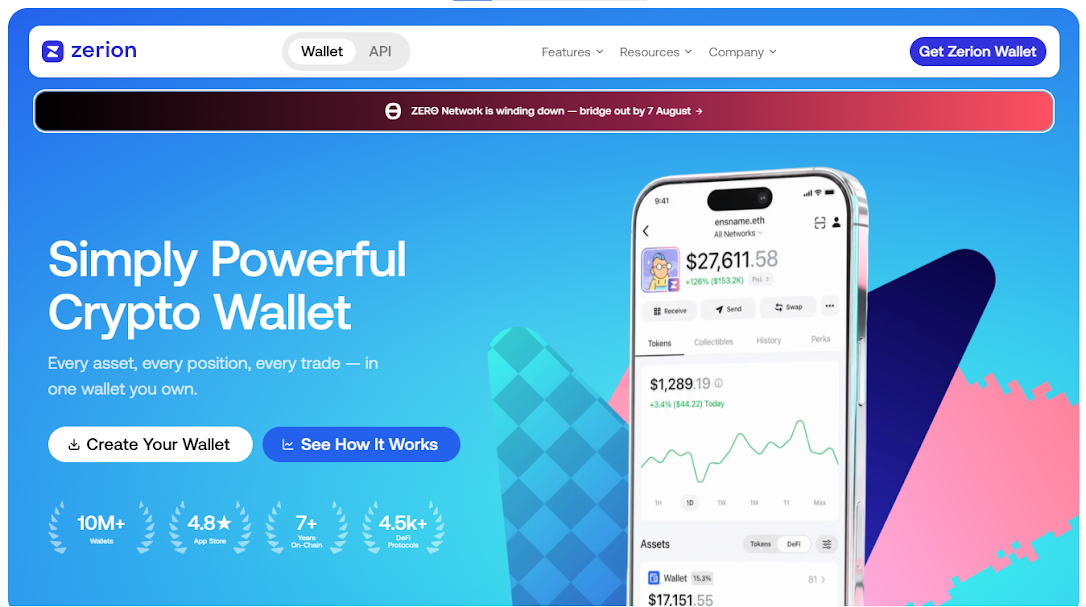
Zerion Wallet: A Simple Guide to Managing Crypto and DeFi
The Zerion Wallet is a self-custody crypto wallet designed for users who want to manage digital assets, DeFi positions, NFTs, and on-chain activity from one place. It is available through mobile devices and browser extensions, giving users a convenient way to explore Web3 while keeping control of their wallet keys.
As cryptocurrency expands across different networks and decentralized applications, managing multiple assets can become complicated. Zerion Wallet focuses on bringing portfolio tracking, token management, swaps, bridges, and decentralized application access into a unified experience.
What Is Zerion Wallet?
Zerion Wallet is a non-custodial crypto wallet, meaning users maintain control of their private keys and recovery information. Zerion states that it cannot access users' seed phrases or private keys. This self-custody model puts responsibility for wallet security directly in the user's hands.
The wallet supports assets across Ethereum, Solana, and numerous other supported networks. Users can view tokens, NFTs, DeFi positions, and transaction activity through a single portfolio interface instead of checking each network separately.
Key Features of Zerion Wallet
Multichain Portfolio Tracking
One of the main advantages of Zerion Wallet is its portfolio tracking functionality. Users can monitor balances, tokens, NFTs, and DeFi positions across multiple supported chains. Zerion's current website highlights support for 58+ chains and cross-chain portfolio visibility.
Token Swaps and Bridges
Zerion also provides tools for swapping and bridging crypto assets. Its platform is designed to find competitive rates across decentralized exchanges and simplify transactions between supported networks.
DeFi and NFT Management
For Web3 users, a wallet needs to do more than simply store tokens. Zerion Wallet can automatically display DeFi positions, including staked assets, liquidity positions, and rewards, while also helping users manage NFTs and interact with decentralized applications.
Security-Focused Design
Security is an important part of the Zerion Wallet experience. Zerion describes its wallet as self-custodial and highlights independent security audits, open-source components, phishing detection, transaction previews, and customizable token allowances.
However, self-custody also means users must protect their recovery phrase carefully. A wallet provider cannot simply recover access if a user loses their recovery information.
How to Get Started With Zerion Wallet
Getting started generally involves installing Zerion Wallet through an official supported platform, creating a new wallet or connecting an existing compatible wallet, and securely backing up the recovery information. Zerion offers mobile applications, browser extensions, and a web-based portfolio experience.
After setup, users can receive crypto, organize their portfolio, connect with supported dApps, explore DeFi opportunities, and monitor transactions. Before approving any blockchain transaction, users should carefully review what they are signing.
Is Zerion Wallet a Good Choice?
Zerion Wallet can be useful for crypto users who want a multichain wallet with portfolio tracking and DeFi functionality. Its combination of self-custody, asset visibility, transaction tools, and Web3 connectivity makes it particularly relevant for people who actively use decentralized applications.
Still, users should understand that no crypto wallet eliminates every risk. Protecting the recovery phrase, checking website addresses, reviewing transaction permissions, and avoiding suspicious links remain essential security practices.
Final Thoughts
Zerion Wallet provides a convenient way to manage crypto assets and explore Web3 across multiple blockchain networks. With features for portfolio tracking, swaps, bridges, NFTs, DeFi positions, and dApp interaction, it brings many everyday crypto activities into one interface.
For anyone considering a self-custody wallet, Zerion can be worth exploring—provided users follow strong security practices and obtain the wallet only through official sources.
Updated about 7 hours ago